Travel across Peru with redPass 🚌✨ and make every short trip more affordable, hassle-free. With a one-time payment of S/ 6 💸, you unlock up to 4 trips with 20% off on selected routes, applied automatically in the app so you can simply choose your destination and go. Perfect for frequent travelers, redPass helps you save while enjoying a smooth, convenient, and budget-friendly journey 🚀 (T&Cs apply).

OUR PROMISE

SECURE PAYMENT
redBus has secure payments and keeps your information and purchases completely safe and secure.

ATTRACTIVE DEALS
Get amazing discounts every time you book with redBus

WIDE CHOICE OF BUSES
150+ Bus companies with 800+ Routes in Perú
Activate your redPass and save on every trip you take.
Juliaca to Arequipa Bus Service
Avg. Bus Duration
:4 hrs 33 mins
Buses depart from
:Juliaca
Bus arrives in
:Arequipa
Cheapest Bus
:PEN 27.00
Bus Companies
:5
Earliest Bus
:03:30
Last Bus
:23:45
Daily Bus Services
:25
Juliaca to Arequipa Bus Timings & Fare
| Bus Operator | First Bus | Last Bus | Duration | |
|---|---|---|---|---|
Transzela | First Bus - 03:30 | Last Bus - 23:45 | Duration - 4 hrs 30 mins | VIEW PRICE |
Oriental JB | First Bus - 12:05 | Last Bus - 12:15 | Duration - 4 hrs 35 mins | VIEW PRICE |
Turismo Zolorzano | First Bus - 07:30 | Last Bus - 23:45 | Duration - 5 hrs 15 mins | VIEW PRICE |
Real Dorado | First Bus - 00:00 | Last Bus - 00:00 | Duration - 4 hrs 45 mins | VIEW PRICE |
Buy Juliaca to Arequipa Bus Tickets Online - Unlock Extra Savings with redDeals on redBus
Reserve a bus from Juliaca to Arequipa with redBus, Peru, and grab exclusive redDeals. Choose from 130 deals on 46 bus operators and avail yourself of discounts up to 25% on your bus travel!
Top Bus Operator Images



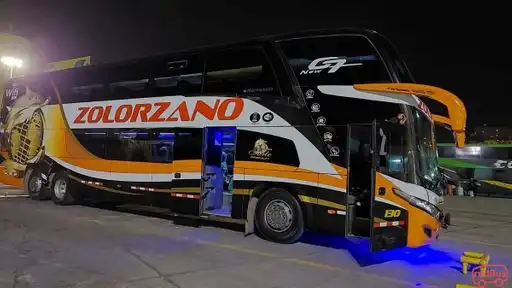
Juliaca to Arequipa by Bus
The travel from Juliaca to Arequipa takes about 5 hours, and you must go across more than 166 mi (267 km) on the highway. The climate of Arequipa is dry and mild, with temperatures that oscillate from 50 °F (10 °C) to 77 °F (25 °C), and with sunny days most of the year.
OTHER BOARDING & DROPPING POINTS IN
Juliaca
- Terminal Terrestre De Juliaca
Arequipa
- Terminal Terrestre Arequipa
- Terrapuerto Arequipa
Why book a Juliaca to Arequipa bus with redBus?
You can also time-to-time redBus offers while booking your bus tickets online from Juliaca to Arequipa. Follow a simple, fast and secure bus booking procedure. This helps save time and also helps to create a joyful travel experience!
About Juliaca
The high plain territory where is located the current Juliaca -also known as the “city of winds”- is rich in history and traditions. It was settled more than 4000 years B.C. by tribes mostly dedicated to agriculture and Andean stockbreeding (llama shepherding and guinea pig breeding).Between the years 200 B.C. and 200 A.D. the Pukara culture dominated the high plain region, leaving traces of its presence in Juliaca on the founded archaeologic remains. In the following centuries, the Tiahuanaco, Colla and Inka cultures fought for the hegemony of the high plain. The incas were the ones who prevailed over the other ones in the fight for the Andean supremacy, under the leadership of Pachacutec.With the Spanish arrival, there was a high plain lands distribution, that culminated with the Spanish foundation of the town of Santa Catalina de Juliaca. During the colonial period the city was scenary of indigenous uprisings against the Spanish domination.In the Republic period, after obtained the Independence of Peru, Juliaca was a rural city until the construction of the railway station (1873) that allowed a greater communication and exchange with the most important cities of the Andean south as Cusco or Arequipa, besides making easier the access of Peruvian and foreign visitors.In 1926 was created, by a supreme order, the province of San Roman, what allowed for the ascent of Juliaca to capital.
Celebrate Holy Week by exploring Peru with TUBUS!
Save up to 50% using the code TUBUS 🚌 (T&C apply) and take advantage of Holy Week to discover new destinations in Peru ✨. Find your ideal trip by comparing schedules, prices, and services 🚍, easily purchase tickets through the app, and travel the country in total comfort while experiencing its traditions ⛪.
About Arequipa
The name Arequipa comes from the quechua word “ari-que-pay”, that refers to a legend about the inca Mayta Cápac; in the legend his subjects, impressed by the beauty of the place, asked him to stay and the inca answered: “yes, stay” (ari-que-pay).In the inca period the incas left the Arequipa territory in search of new places to conquer. The official foundation of the city took place in 1540, by the Spanish who arrived there to take advantage of the mines of the area in the colonial period.The city prospered quickly due to its advisable location in the mining transit path, becoming the most important commercial city, and standing out for its loyalty to the Spanish crown.During the republic, Arequipa was the place where concentrated most of the uprisings and social and political conflicts, what (later on time) would deserve its title of “Hero city of the free people of Arequipa”. Nowadays the city of Arequipa is one of the metropolis of higher economic, cultural and touristic importance inside the country.
Arequipa, known as the "White City," is Peru’s second-largest city, famous for its colonial architecture made from white volcanic stone. Surrounded by volcanoes like El Misti, the city is a UNESCO World Heritage Site and serves as a gateway to the Colca Canyon. Arequipa offers a mix of history, culture, and traditional Peruvian cuisine.
Weather in Arequipa
Arequipa has a pleasant climate with temperatures ranging from 10°C to 25°C (50°F to 77°F) throughout the year. The dry season, from May to September, is ideal for visiting.
Hotels in Arequipa
Casa Andina Premium Arequipa
- Location: Ugarte 403, Arequipa.
- Price: From S/ 300 per night.
- Description: A luxury hotel in a colonial mansion with modern comforts and a picturesque courtyard.
Hotel Casona Solar
- Location: Consuelo 116, Arequipa.
- Price: From S/ 150 per night.
- Description: A charming boutique hotel with spacious rooms and a quiet garden.
Restaurants and Bars in Arequipa
Zig Zag Restaurant
Location: Zela 210.
Average Price: Between S/ 50 and S/ 120.
Description: Known for its sizzling meat plates served on volcanic stone and fusion dishes.
La Nueva Palomino
Location: Leoncio Prado 122.
Average Price: Between S/ 30 and S/ 70.
Description: A traditional picantería offering local specialties like rocoto relleno and adobo.
Gastronomy of Arequipa
Rocoto Relleno: Spicy stuffed pepper with meat, cheese, and spices.
Adobo Arequipeño: Pork stew marinated in chicha and spices, served hot.
Queso Helado: Traditional homemade ice cream with cinnamon and coconut.
Tourist Attractions in Arequipa
Santa Catalina Monastery: A colonial convent with colorful alleys and courtyards.
Plaza de Armas: A lively square surrounded by colonial buildings and the Cathedral.
Colca Canyon: One of the world’s deepest canyons, home to the majestic Andean condor.
Important Dates in Arequipa
August 15: Arequipa’s Anniversary, with parades, concerts, and cultural events.
Holy Week: Religious processions and traditional celebrations.
Festival of the Virgen de Chapi (May 1): A significant pilgrimage and festival.
Things to Buy in Arequipa
- Alpaca Wool Products: High-quality scarves, sweaters, and ponchos.
- Sillar Crafts: Decorative items made from volcanic stone.
- Arequipa Cheese: Fresh and locally produced cheese.
How to Get from Juliaca to Arequipa by Bus
The distance from Juliaca to Arequipa is approximately 270 km (168 miles), and the bus journey takes around 5 to 6 hours, depending on the operator and traffic conditions.
Bus Operators for the Route
- Turismo Zolorzano
- Destinos
- Transzela
Departure and Arrival Terminals
In Juliaca: Buses depart from Terminal Terrestre de Juliaca.
In Arequipa: Buses arrive at Terminal Terrestre de Arequipa, close to the city center.
Experience Carnival in Peru while saving money!
Enjoy a 20% discount on bus tickets in Peru with redBus and experience the power of choosing your bus 🚍✨ using the code CARNAVALES. Travel around the country choosing from more than 90 routes connecting cities such as Arequipa, Ayacucho, Huaraz, Cajamarca, among many other destinations, comparing prices, schedules, and the best transportation companies. Buy easily and securely from the redBus website or app, choose your seat, and take advantage of this promotion to travel comfortably and pay less on your next trips.
FAQs
How can I make an online bus ticket booking in Peru?
You can book a bus of your choice to any destination in Peru by logging on to the official website of redBus which is redbus.pe/en/ . The site is user-friendly and you can book your bus ticket in a matter of minutes.
How do I book a bus from Juliaca to Arequipa?
You can either visit the terminal and go the booth belonging to the bus operator of your choice, wait in line, select a seat, and book your ticket. If you’d rather not do that, you can visit redbus.pe/en/ and book your seat within 5 minutes.
Do I need to print out my bus ticket before boarding?
There are two main scenarios that you might fall into when you have to board a bus. Now, if your boarding point is at any terminal in redbus.pe/en/ , passengers will have to take a print out of the bus ticket that has been sent to the email in a PDF format. The second scenario is when your boarding point is a bus stop and not a terminal. In this case, you will receive an M-ticket that you will have to produce before boarding your bus. If the operator does not provide an M-Ticket, you will have to take a printout of the ticket (PDF) that has been sent to the registered email ID that you have used to book the bus ticket on the redBus website. Some operators might levy a charge if these conditions are not followed.
Can I reschedule my journey after I have booked my ticket?
Yes, you can. But this feature is limited to only a few bus operators in Peru. Look for the reschedule icon before booking your ticket.
How do I pay for my bus ticket on the redBus website?
There are a number of different modes of payment offered to customers. Customers can either pay by credit card, debit card, or they can select any of the banks listed when you click the “FPX (Peru Online Bank Transfer).
Popular Bus Routes from Juliaca
Popular Bus Routes to Arequipa
Top Bus Operators in Juliaca
Top Bus Operators in Arequipa
Other Bus Routes From Juliaca
Juliaca to Sicuani BusJuliaca to Terminal Terrestre Puno BusJuliaca to Pucará BusJuliaca to Tacna BusJuliaca to Terminal Terrestre Tacna BusJuliaca to Huamalies BusJuliaca to Cusco BusJuliaca to Moquegua BusJuliaca to Union Progreso (Madre de Dios) BusJuliaca to Puno BusJuliaca to La Victoria BusJuliaca to Ayacucho BusJuliaca to Terminal Terrestre Cusco BusJuliaca to Nazca BusJuliaca to Lechemayo (Madre de Dios) BusJuliaca to Desaguadero BusJuliaca to Terminal Cono Norte BusJuliaca to Lima BusJuliaca to Terminal Terrestre Arequipa Busmore >>
Other Bus Routes To Arequipa
Ica to Arequipa BusBateas to Arequipa BusDesaguadero to Arequipa BusParacas to Arequipa BusLa Victoria to Arequipa BusCabanaconde to Arequipa BusChallhuahuacho to Arequipa BusAlfonso Ugarte to Arequipa BusAv. Paracas to Arequipa BusTerminal Terrestre Cusco to Arequipa BusTacna to Arequipa BusTerminal Yerbateros to Arequipa BusLima to Arequipa BusTerminal Camana to Arequipa BusCamaná to Arequipa BusCotahuasi to Arequipa BusCusco to Arequipa BusSan Isidro to Arequipa BusEspinar to Arequipa Busmore >>
Other Bus Routes
Tomas Valle to Av. Arias BusMáncora to Terminal Zorritos BusAv. Loreto to La Matanza BusPedro Ruiz to Olmos BusRioja to San Hilarión BusLima to Bambamarca BusBellavista to Pomacochas BusCusco to Machu picchu BusTerminal Terrestre Naranjal to Guadalupe BusTerminal Terrestre Sullana to Terminal Talara BusTerminal Lambayeque to Pucará BusTerrapuerto Arequipa to Alfonso Ugarte BusChavin to Barranca BusPaiján to La Victoria BusRioja to Terminal Terrestre La Molina BusSan Hilarión to Picota BusTacna to Juli BusTerminal Juanjui to Lima BusArequipa to Sicuani BusTerminal Terrestre El Chimbador to Bagua Grande Busmore >>
Other Bus Operators
JaksaGrupo IberiaTransportes Schaft RoadWaysTavanibusTransportes Moquegua TurismoMechitaNativa ExpressSanta Ana EdumarEntur Cisnes PerúSan Martin NoblezaSumaqBusIguazúGaza ExpressFirst Class HuarazTransportes Global BusHeroes del PacificoNativa TripsAirport ExpressIntur MachupicchuTurismo las Brizasmore >>